
Foundation Stack
Identification of three core behaviors (hydration, mobility, reflection) anchored to physiological triggers like waking or dining.
- Stabilizes cortisol
- Low-friction entry
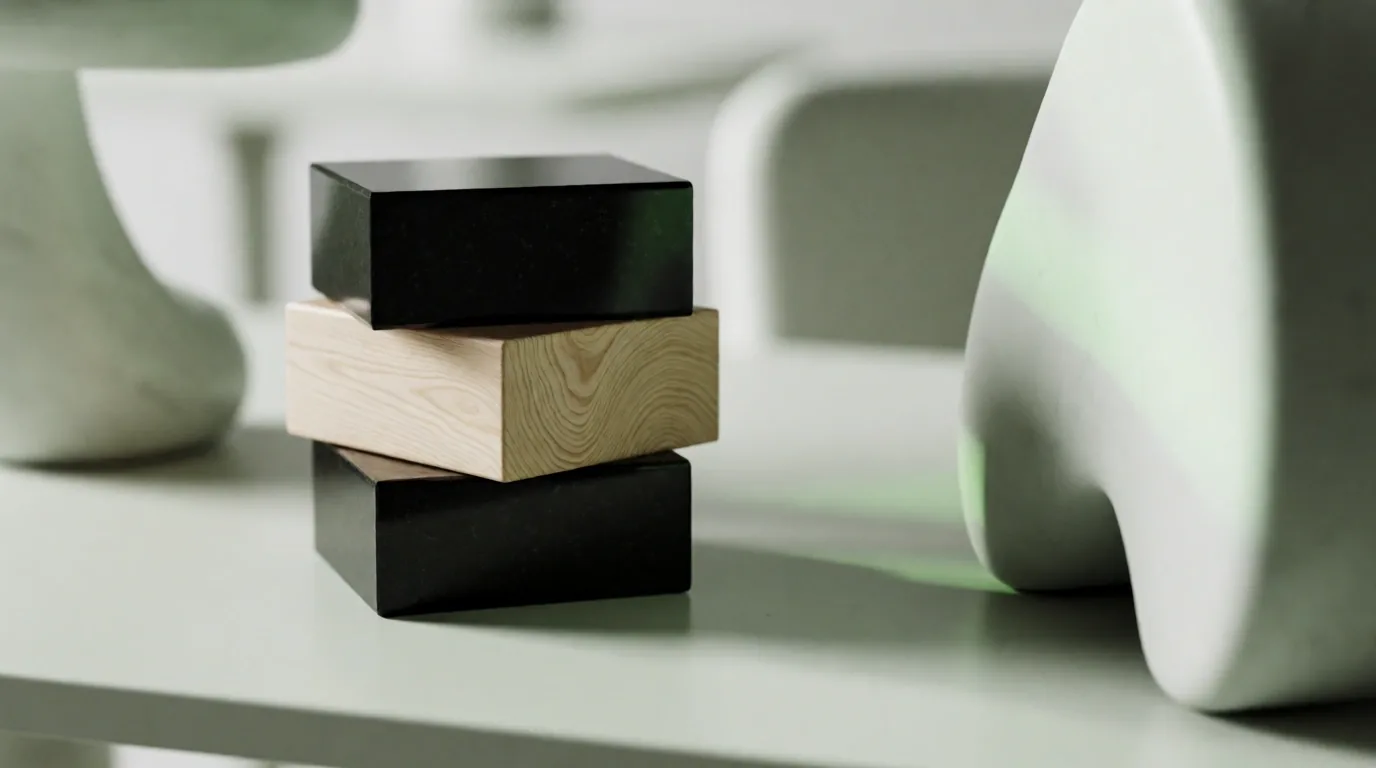
Integrate new behaviors by anchoring them to the established mechanisms of your existing daily routine.
In the atelier of Habit Architecture, we view your existing routines not as chores, but as the primary gears of a biological gearbox. To add a new behavior successfully, it must be mechanically meshed with a gear that is already in motion. This reduces the cognitive friction of "starting" and replaces it with the momentum of "continuing."
"The strength of the stack is determined by the stability of the anchor." — Vancouver Methodology Notes

Habit stacking follows a strict hierarchy of complexity. We begin with foundations before attempting high-frequency cognitive rituals.
Identification of three core behaviors (hydration, mobility, reflection) anchored to physiological triggers like waking or dining.
A high-leverage 4-step ritual meshed with the first hour of professional presence. Designed for cognitive clarity and deep work.
A technical integration service for removing workflow friction. Custom-built for Vancouver-based high-performance teams.
The anchor must be a non-negotiable event. Examples: "After I pour my first cup of coffee," or "When I close my laptop for lunch."

The new habit should initially require less than 60 seconds of effort. Mastery precedes expansion in our behavioral architecture.

Removing negative visual cues is as vital as adding positive ones. We calibrate your space to minimize friction.

The use of ledger-based tracking provides a technical record of consistency, reinforcing the structural integrity of the stack.

Judge your current system against our architectural standards. Not every habit is suitable for stacking.
Relies on external alarms, notifications, or willpower spikes to initiate the action.
Utilizes the neuro-pathway of the previous task to carry you into the next behavior.
Treats a new habit as a standalone project with its own overhead and scheduling needs.
Treats the behavior as a modular component that 'plugs in' to an existing power source.
Triggers often shift based on mood, location, or the presence of others.
Anchored to universal constants like morning coffee, work login, or home entry.
Following a technical order of operations ensures the architectural integrity of your new habit stack.
List every behavior you perform currently without failure. Common anchors include: closing the front door, turning on a faucet, or opening your mail. These are your "fixed gears."
Note: If you miss a "fixed gear" more than once a month, it is not stable enough to serve as an anchor.
Choose one new behavior that serves your long-term goal. It must be specific. Instead of "I will meditate," use "I will take three deep breaths with my eyes closed."


Execute the stack for seven consecutive days. If the chain breaks, evaluate the friction. Did the anchor move? Was the new habit too complex? Adjust the mechanics, do not blame the willpower.
Request a Methodology ReviewCross-reference your stacking strategy with our core resources.
Specific stacks for high-focus professional output before noon.
Technical templates for documenting daily sequence integrity.
How to remove friction from your professional workspace.
Our curated literature on behavioral mechanics and structuralism.
If you are ready to audit your current behavioral architecture, our Vancouver studio provides custom stacking consultations for individuals and organizations.
+1-604-552-6588
[email protected]
We analyze your existing daily recurrence patterns to identify stable gears.
Within 48 hours, you receive a technical sequence guide tailored to your workspace.
A secondary check after 14 days to adjust for environmental friction.